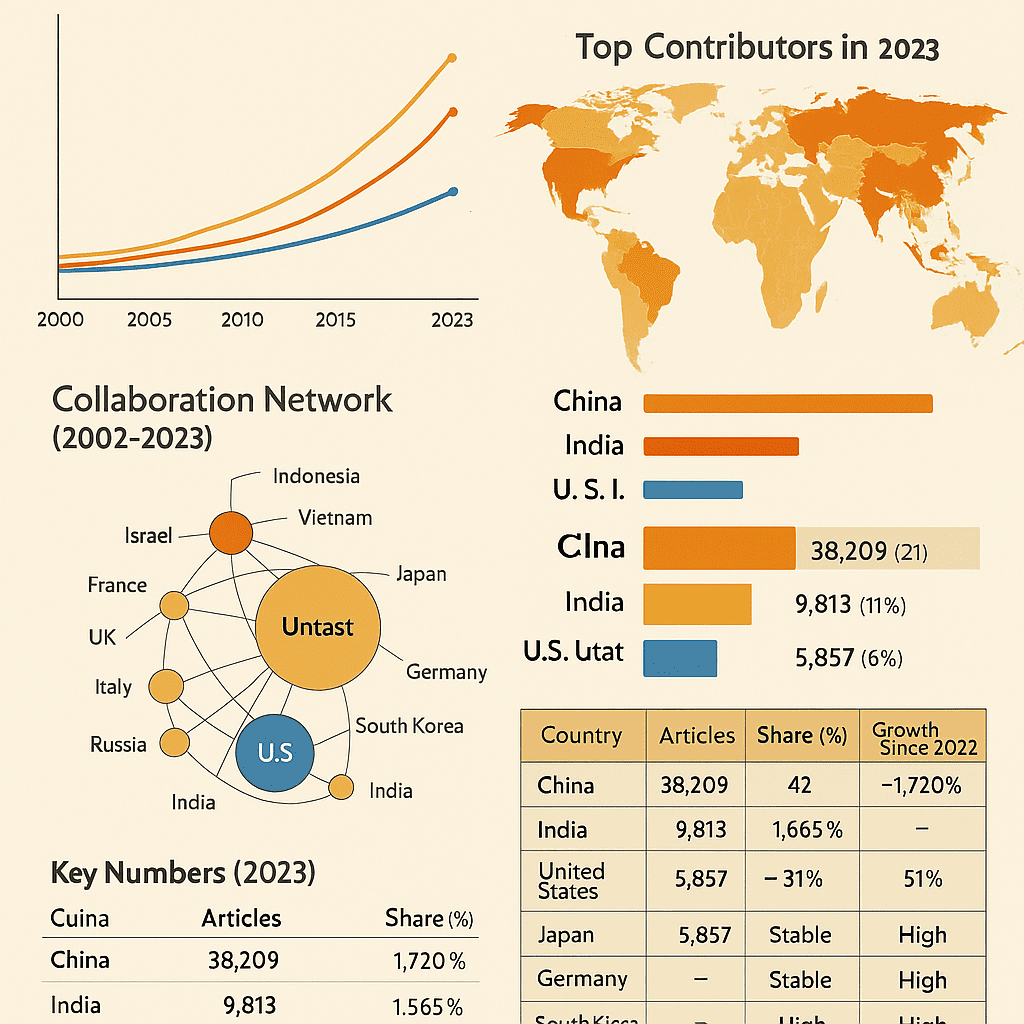
Semiconductor Research India and China comparision.
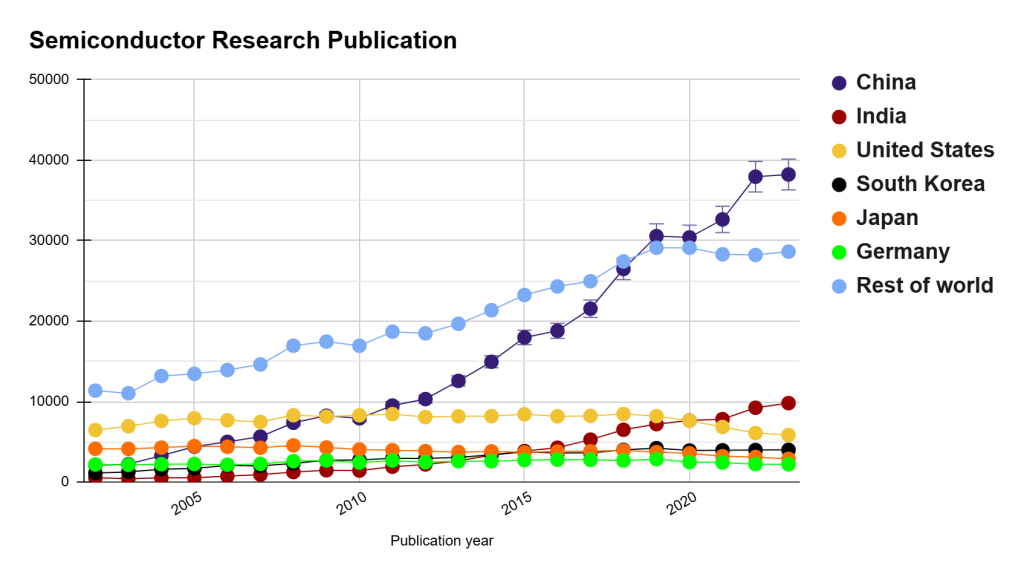
The semiconductor revolution is quietly rewriting the map of global science. Over the past two decades, research in this field has more than tripled — growing 228% worldwide from 27,963 papers in 2002 to 91,631 in 2023. But the real story is where that growth happened: the center of innovation has clearly moved East, led by China and India.
Between 2002 and 2023, semiconductor studies surged across the world. Six countries — China, the United States, Japan, India, Germany, and South Korea — now produce nearly 70% of all global publications.
The Global Boom in Semiconductor Research
Top contributors in 2023:
- China: 38,209 papers (42%)
- India: 9,813 papers (11%)
- United States: 5,857 papers (6%)
Together, these three nations account for almost 60% of the world’s total semiconductor research output.
China’s Meteoric Rise and India’s Begining in the Field
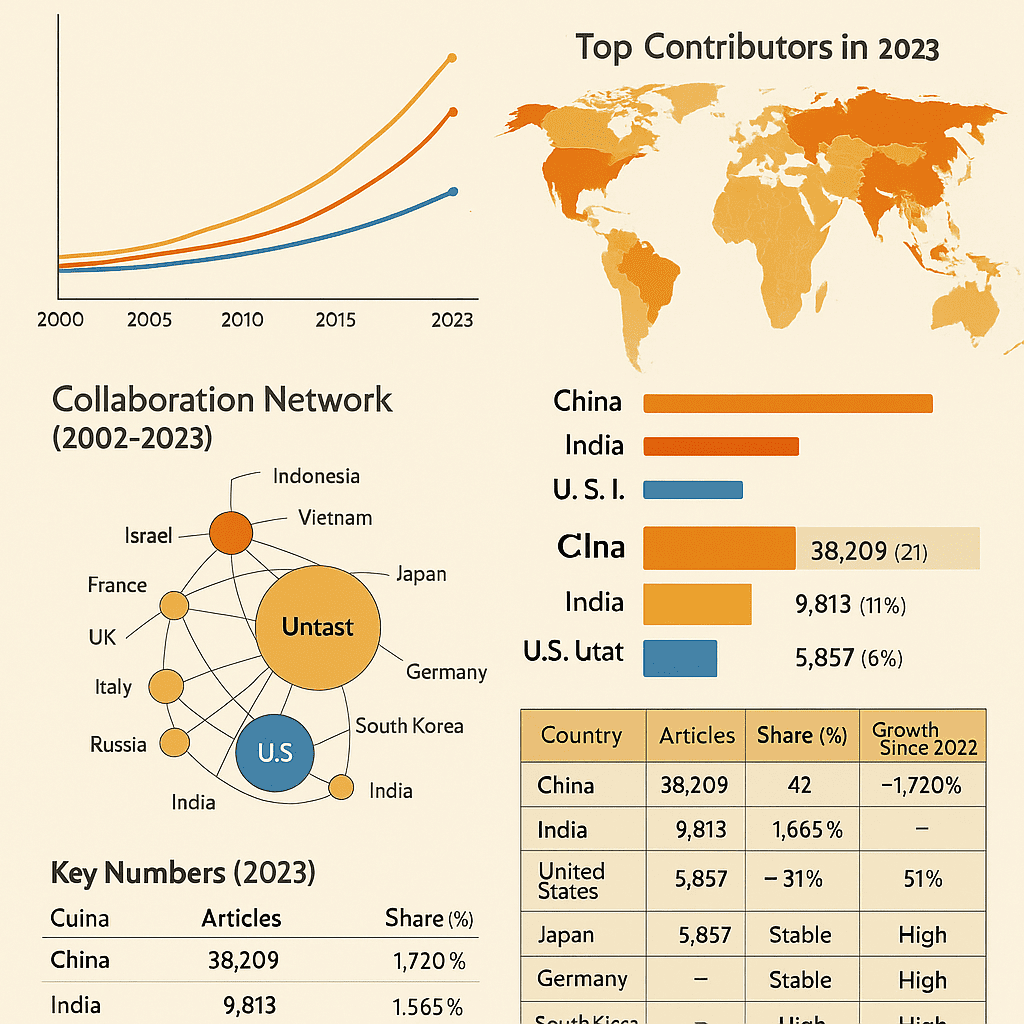
China’s growth is nothing short of astonishing — a 1,720% rise since 2002. It overtook the U.S. in 2011 and now stands as the undisputed global leader. Interestingly, only 17% of Chinese papers involve international collaboration, showing its growing domestic research strength.
India’s output grew 1,665%, from just 556 papers in 2002 to 9,813 in 2023. It passed the United States in 2020 to become the third-largest global contributor. India’s rise reflects strong academic-industrial partnerships and national focus on semiconductor design, fabrication, and AI-based materials.
The U.S. Still the Collaboration Hub
While the U.S. once led this field, its solo publication count has declined by 31% since its 2018 peak. However, it remains at the heart of the global network — 51% of American papers are international collaborations, the highest share among major countries.
The most common collaboration pairs tell the story:
- U.S.–China: 25,530 coauthored papers
- U.S.–South Korea: 9,605
- U.S.–Germany: 9,477
Thanks For Reading