Lunar eclipses: the science, the myths, and real-world effects (for humans, animals, and other worlds)
Introduction
On the night of September 7–8, 2025, skywatchers across Asia, Africa, Europe, and Australia witnessed a rare and prolonged total lunar eclipse, commonly known as a “Blood Moon,” lasting around 82 minutes. This astronomical event offers a beautiful lesson in natural phenomena—as well as an opportunity to bust widely held myths using science. Read on to learn exactly how this happens, and why it’s absolutely safe to enjoy your dinner without any fuss.
What Is a Lunar Eclipse?
A lunar eclipse occurs when the Earth aligns precisely between the Sun and the Moon, casting its shadow upon the Moon during a full Moon phase. Depending on the alignment, there are three types of lunar eclipses:
• Penumbral eclipse: subtle, often hard to notice
• Partial eclipse: part of the Moon passes through Earth’s dark shadow
• Total eclipse: the entire Moon passes into the umbra, Earth’s darkest shadow
Lunar eclipses don’t happen every month because the Moon’s orbit is tilted about 5° relative to Earth’s orbital plane.
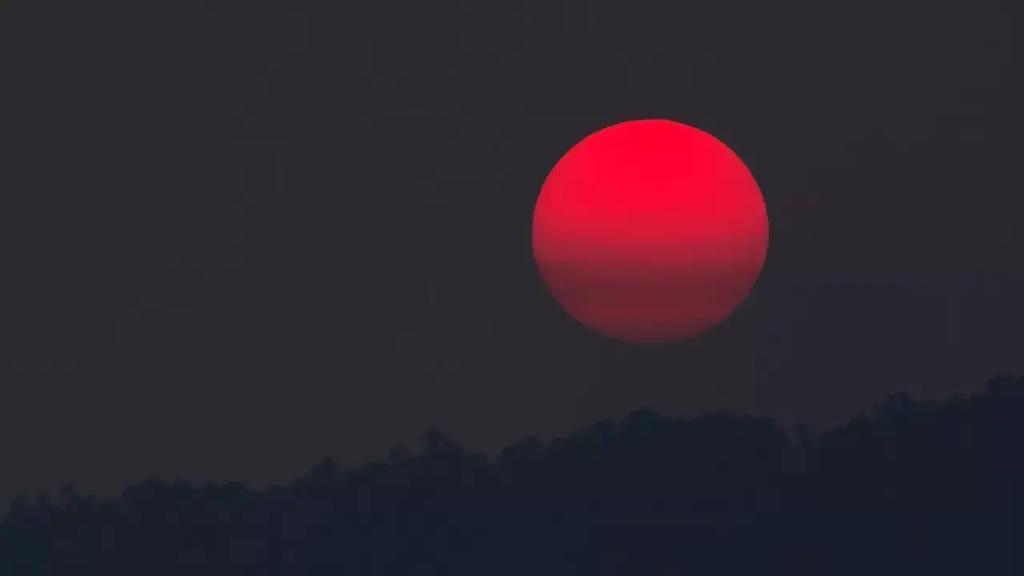
Why the Moon Turns Red: The ‘Blood Moon’
During a total lunar eclipse, Earth’s atmosphere acts like a lens—scattering blue light and allowing red wavelengths to filter through and illuminate the Moon with a coppery hue. This is the same physics that makes sunsets red. The exact shade depends on atmospheric conditions such as dust, smoke, or volcanic ash.
Myth‑Busting: Is It Dangerous to Eat During a Lunar Eclipse?
Myth: “Don’t eat during a lunar eclipse—it’s harmful.”
Reality: Absolutely false. There’s no scientific basis for any health hazard linked to observing or eating during a lunar eclipse. The event involves harmless visible light—nothing harmful touches your food or body.
Effects on Humans: Health, Behavior, and Sleep
Scientific studies consistently find no proven effects of lunar eclipses—or even full Moons—on human physiology, behavior, or hospital visits. The so-called ‘lunar effect’ has been found unsubstantiated in meta-studies and reviews.
How Do Animals React?
Many animals rely on natural light cues. During a lunar eclipse’s brief darkening, nocturnal species might experience brief disorientation or altered activity. Behavior changes are transient and subtle, unlike the dramatic responses seen in solar eclipses.
What Happens on Earth? (Tides, Seismic Activity, etc.)
Full Moons bring spring tides, but the eclipse doesn’t amplify them beyond ordinary full‑Moon levels. Studies show no evidence of increased earthquakes or volcanic activity during lunar eclipses.
Watching the Eclipse: How to Enjoy It Safely
Watching a lunar eclipse is 100% safe with the naked eye (unlike solar eclipses, which require special filters). Binoculars or a small telescope can enhance the view, but are not necessary. As totality begins, the Moon will glow red—a sight best enjoyed under clear, dark skies.
Global Visibility and Viewing Details
The total lunar eclipse of September 7–8, 2025 will be visible across most of Asia, Africa, Europe, and Australia, with totality lasting up to 82 minutes, making it one of the longest in recent years.
Conclusion
A lunar eclipse is a predictable cosmic event where Earth’s shadow bathes the Moon in red hues through atmospheric optics. It’s a wonderful spectacle, safe to observe, and harmless to food or human behavior. Feel free to enjoy your evening—dinner and eclipse alike—with curiosity, not caution.
Featured Sources (Full Links)
NASA: https://science.nasa.gov/moon/eclipses/
NASA (March 2025 Eclipse Guide): https://science.nasa.gov/solar-system/moon/what-you-need-to-know-about-the-march-2025-total-lunar-eclipse/
Wikipedia – Eclipses in mythology and culture: https://en.wikipedia.org/wiki/Eclipses_in_mythology_and_culture
Wikipedia – Lunar effect: https://en.wikipedia.org/wiki/Lunar_effect
Times of India – Myths debunked: https://timesofindia.indiatimes.com/life-style/spotlight/lunar-eclipse-2025-common-myths-debunked/photostory/123658798.cms
Live Science – Moon and animals: https://www.livescience.com/37928-ways-the-moon-affects-animals.html
Space.com – What to expect: https://www.space.com/stargazing/lunar-eclipses/what-to-expect-blood-moon-total-lunar-eclipse-sept-7-2025
Times of India – Global spectacle: https://timesofindia.indiatimes.com/science/lunar-eclipse-2025-over-7-billion-people-to-witness-rare-chandra-grahan-on-september-7-how-to-watch-the-blood-moon-and-essential-tips/articleshow/123631666.cms
People.com – How to watch: https://people.com/how-to-watch-the-blood-moon-total-lunar-eclipse-september-2025-11803263
Times of India – Why the Moon glows red: https://timesofindia.indiatimes.com/science/nasa-unveils-why-the-blood-moon-lights-up-the-sky-in-red/articleshow/123678151.cms