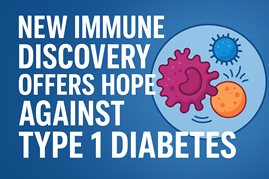
New Immune Discovery Offers Hope Against Type 1 Diabetes
In 1990, only 30% of India’s total disability-adjusted life years (DALYs) came from NCDs. By 2016, this number had nearly doubled to 55%, while diabetes alone rose from the 35th leading cause of disease burden in 1990 to 13th place in 2016.
A new study has found that a special type of immune cell in the pancreas could help protect the body from developing type 1 diabetes.
What new Research find
Type 1 diabetes happens when the body’s own immune system destroys the beta cells in the pancreas that make insulin. But scientists have now found that another kind of immune cell — called a macrophage — can help calm this attack.
These macrophages act like the body’s clean-up crew. They remove dying cells in a process called efferocytosis, which helps keep tissues healthy and prevents unnecessary inflammation. When researchers studied mice and human pancreatic tissue, they found a special group of these macrophages, called efferocytic macrophages (e-Mac), that switch into a protective, anti-inflammatory mode when beta cells start to die.
How Study was done
In experiments with mice prone to diabetes, increasing these e-Mac cells helped prevent the disease from developing. The researchers also discovered that these macrophages send signals through a pathway known as IGF-1, which makes attacking T cells less aggressive — almost putting them into a “sleep” state.
This discovery suggests that helping the body make more of these protective macrophages could one day be used to prevent or slow down type 1 diabetes.
Source: Zakharov, P.N., Chowdhury, C.S., Peterson, O.J. et al. Efferocytic remodelling of pancreatic islet macrophages by limited β-cell death. Nature (2025). https://doi.org/10.1038/s41586-025-09560-4
India’s Alarming Diabetes Numbers
According to the International Diabetes Federation (IDF), India has the second-highest number of diabetes cases in the world, after China.
- 77 million Indians live with diabetes today, projected to rise to 134 million by 2045.
- Nearly 57% of cases remain undiagnosed, meaning about 44 million people have diabetes without knowing it.
- Over 1 million deaths each year in India are directly linked to diabetes and its complications.
- The average healthcare cost per diabetic person is 92 USD, but many lack regular access to affordable care.
The prevalence of diabetes in India rose from 7.1% in 2009 to 8.9% in 2019, and continues to climb.