
Breakthrough at IIT Delhi: MOD-PC Chip Could Revolutionize AI, Semiconductors and Neuromorphic Computing
IIT Delhi Researchers Develop MOD-PC: A Tiny, Energy-Efficient Computer Inspired by the Human Brain
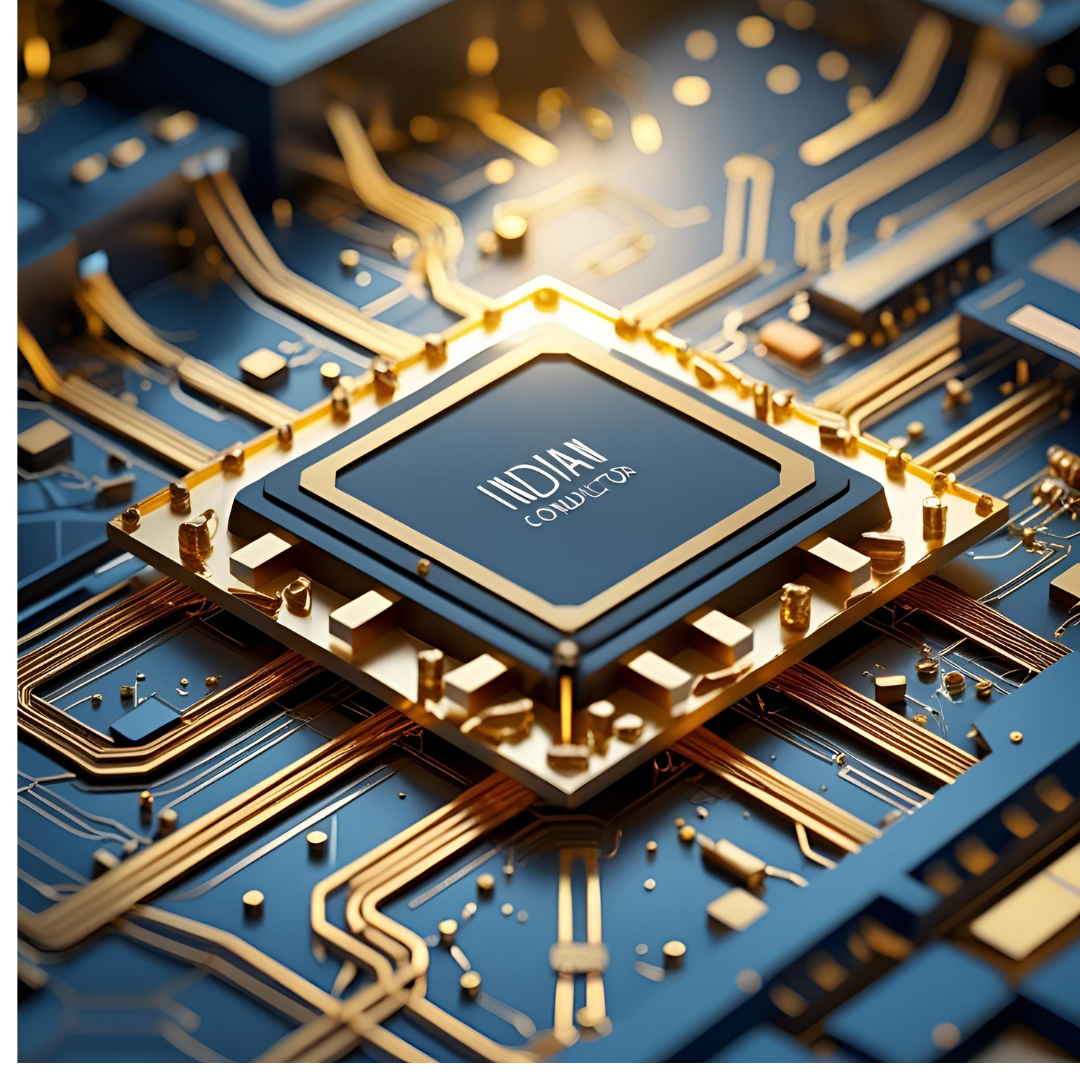
New Delhi: In a major step toward next-generation computing, a team of researchers at the Indian Institute of Technology (IIT) Delhi has designed a small, energy-efficient computing device using advanced 2D-materials technology. The innovation, called MOD-PC (Multifunctional Optoelectronic Device for Processing Circuits), has the potential to transform the future of chips, making them faster, smarter, and more sustainable.
What Makes MOD-PC Different?
Most computers today are built on conventional semiconductor materials and architectures. While reliable, these systems are bulky and consume a large amount of power. MOD-PC, on the other hand, is fabricated with Tungsten Diselenide (WSe2) — a light-sensitive 2D material only a few nanometers thick. This makes it ultra-compact, power-efficient, and capable of integrating multiple functions in one device.
Dr. Manoj Kumar, the study’s first author, explained that MOD-PC draws inspiration from the human brain’s visual cortex. Much like neurons learning from light signals, this computing unit can process optical inputs, emulate synaptic plasticity (the brain’s ability to strengthen or weaken connections), and store data for long-term use. Unlike traditional systems that separate memory and processing, MOD-PC integrates both — a leap toward overcoming the memory and power bottlenecks in current technology.
Building India’s Own Future Chips
Dr. Kumar highlighted that MOD-PC is fully designed and tested in India, aligning with the spirit of “Atma Nirbhar Bharat” and the Indian Semiconductor Mission (ISM). Currently a post-doctoral scientist at TUM, Germany, he continues to focus on quantum and neuromorphic computing systems.
Kritika Bhattacharya, a senior research fellow at IIT Delhi who led the fabrication process, pointed out the technical challenges: creating functional chips with WSe2, a material just a few atoms thick, was extremely demanding. Yet with advanced techniques and persistent effort, the team successfully demonstrated working prototypes.
Why MOD-PC Matters
According to Prof. Samaresh Das, Head of the Centre for Applied Research in Electronics (CARE) and the project’s Principal Investigator, MOD-PC could revolutionize the hardware behind artificial intelligence, neuro-inspired computing, and robotics. By merging digital, analog, and mixed-signal functions into a single chip, the technology promises to reduce power consumption dramatically while making devices more versatile.
This work, recently published in Advanced Functional Materials, signals India’s strong entry into the race for next-gen semiconductor innovation.
A Step Toward the Future of Computing
The development of MOD-PC is not just an academic success — it’s a strategic milestone for India. With global demand for chips skyrocketing and the world moving toward AI-driven devices, innovations like this open the door for startups, semiconductor industries, and policymakers to collaborate on commercializing indigenous technologies.
If scaled successfully, MOD-PC could place India on the map as a serious contender in neuromorphic computing and AI hardware, while also supporting the broader vision of a self-reliant semiconductor ecosystem.