Human Eggs Made from Skin DNA: A Leap Toward the Future of Reproduction
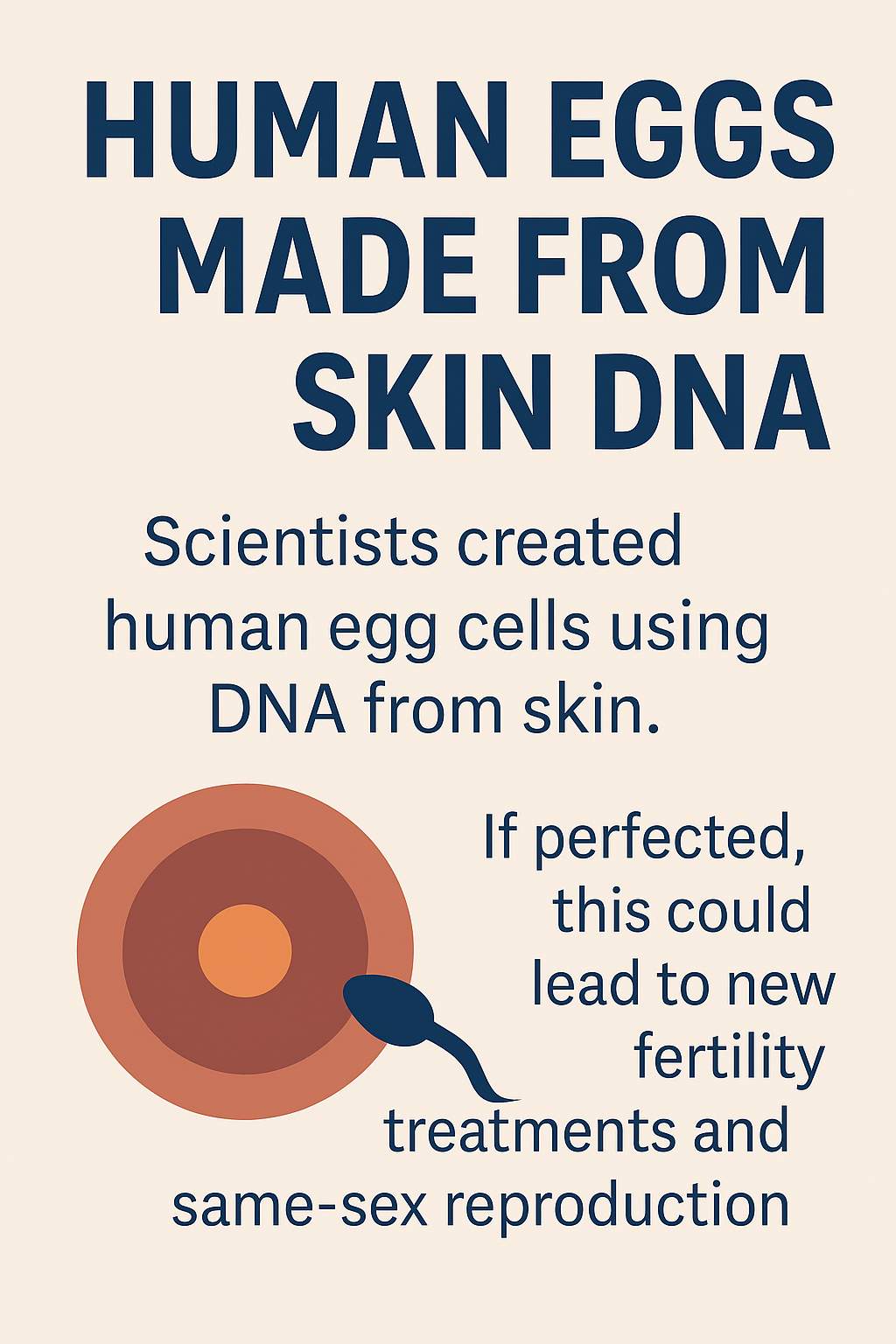
In a stunning advance, scientists have created human egg cells from skin DNA and fertilised them in the lab. This experiment, led by Shoukhrat Mitalipov at Oregon Health and Science University, could one day allow same-sex couples or infertile women to have biological children.
How it Work
The researchers took mature human eggs and removed their genetic material. Then, they replaced it with DNA from a woman’s skin cell. Normally, body cells have 46 chromosomes, while eggs and sperm each have 23—so the challenge was to make the modified egg correctly halve its chromosomes before fertilisation.
Using a combination of chemical and electrical cues, the team was able to trigger the same division process that occurs naturally during fertilisation. When sperm was added, some of these engineered eggs successfully developed into blastocysts—the early-stage embryos formed around five to six days after conception.
Success Rate
It’s a monumental step, but still far from clinical use. Only about 9 percent of fertilised eggs reached this stage, and many had genetic abnormalities. Scientists caution that the process remains immature and ethically delicate.
What new Finding do?
If perfected, this could transform fertility treatment, same-sex reproduction, and even conservation biology. But it also raises deep questions: What defines parenthood when both genetic materials could come from the same sex? How do we draw ethical limits before science runs ahead of society?As researcher Mitinori Saitou from Kyoto University put it, the method is “too immature for clinical use—but too important to ignore.”
Source: Nature